

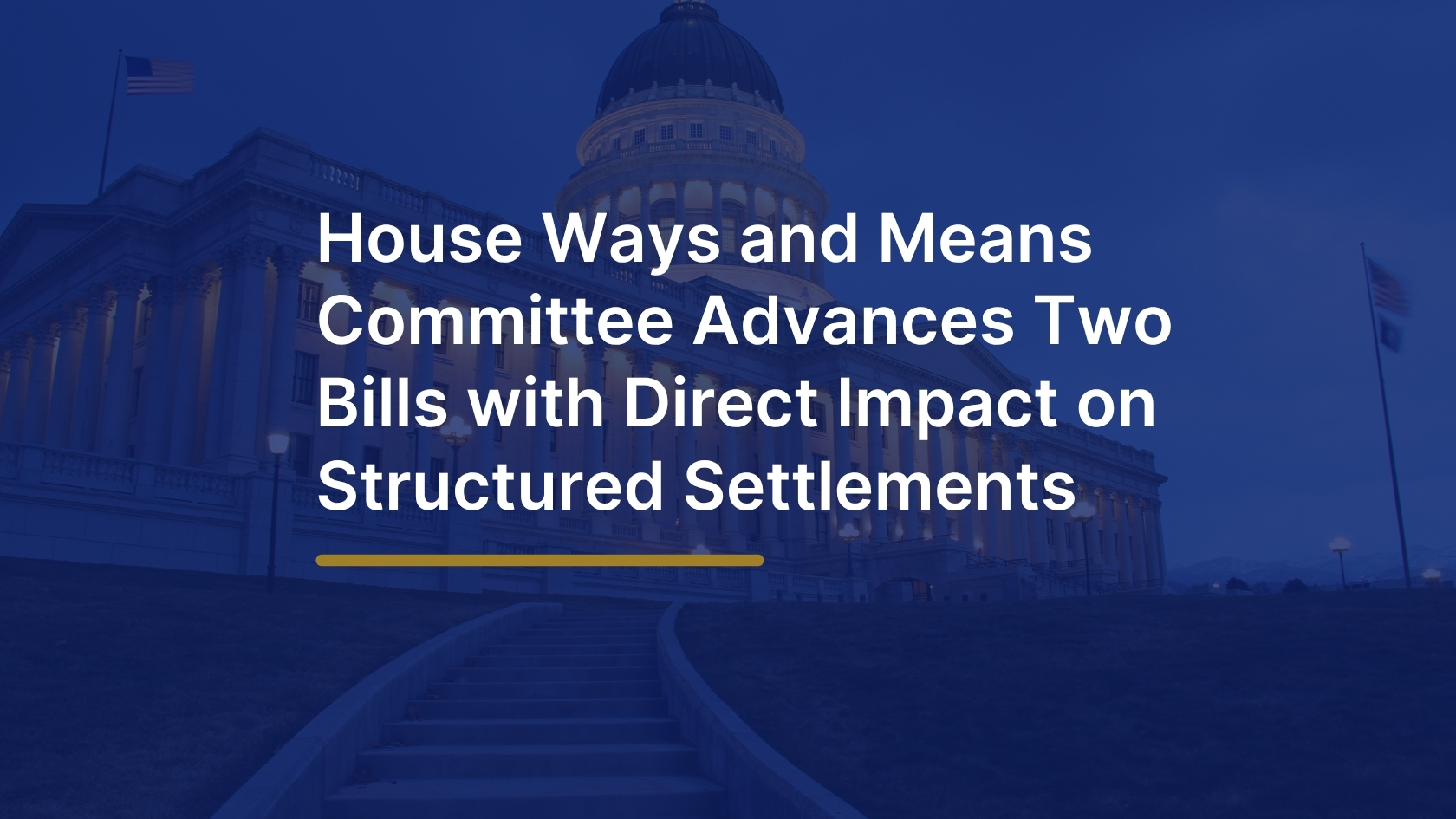
With fewer than 120 legislative days on the 2026 Congressional calendar and midterm elections approaching in November, the window for meaningful legislative action is narrow. That makes the recent activity out of the House Ways and Means Committee all the more significant.
In a rare demonstration of bipartisan support, the Committee passed two pieces of legislation important to survivors of sexual abuse, victims of wildfires, and the expanded use of structured settlements. Both bills advanced unanimously.
Survivor Justice Tax Prevention Act
On a vote of 41 to 0, the Committee advanced the Survivor Justice Tax Prevention Act, introduced by Rep. Lloyd Smucker (R-PA) and Rep. Gwen Moore (D-WI). The legislation would amend the Federal Tax Code to ensure that survivors of sexual abuse and unwanted or illegal sexual contact do not have to pay taxes on settlement income when they prevail legally against their abuser.
For survivors who have already endured significant trauma, facing a tax burden on the very compensation meant to help them rebuild can feel like a second injustice. This bill recognizes that principle and seeks to correct it.
The bipartisan sponsorship reflects a shared understanding across party lines: survivors deserve to keep the full benefit of their legal recovery.
Doug LaMalfa Federal Disaster Tax Relief Certainty Act
On a vote of 43 to 0, the Committee also passed the Doug LaMalfa Federal Disaster Tax Relief Certainty Act, sponsored by Rep. Greg Steube (R-FL), Rep. Mike Thompson (D-CA), and Rep. Jimmy Panetta (D-CA). The bill would eliminate any tax liability on settlements for the innocent victims dealing with the tremendous damages caused by serious wildfires.
As wildfire events have grown in both frequency and severity, the financial recovery process for affected families has become increasingly complex. This legislation would provide much-needed certainty: that settlement funds intended to help victims recover and rebuild will not be diminished by federal tax obligations.
What This Means for the Structured Settlement Community
Both bills reinforce a principle that has been central to NSSTA’s mission for over four decades: that structured settlements exist to provide long-term financial security for individuals and families facing extraordinary circumstances.
When settlement income is protected from taxation, the case for structured settlements becomes even stronger. These legislative actions expand the landscape in which structured settlements can serve their core purpose, delivering predictable, tax-advantaged income to people who need stability the most.
Next Steps in the Legislative Process
While passage through the Ways and Means Committee is a significant milestone, both bills must still advance through the full House, pass the Senate, and receive the President’s signature before becoming law. With Congress navigating a crowded agenda that includes implementation of the One Big Beautiful Bill Act, expiring tax provisions, and ongoing budget negotiations, the pace at which these bills move forward will depend on continued bipartisan momentum.
NSSTA will continue to work with Members of Congress in both the House and the Senate to support both measures as they move through the legislative process. For questions about either bill or their potential impact on structured settlement practice, NSSTA members are encouraged to contact NSSTA Executive Director Eric Vaughn directly.