


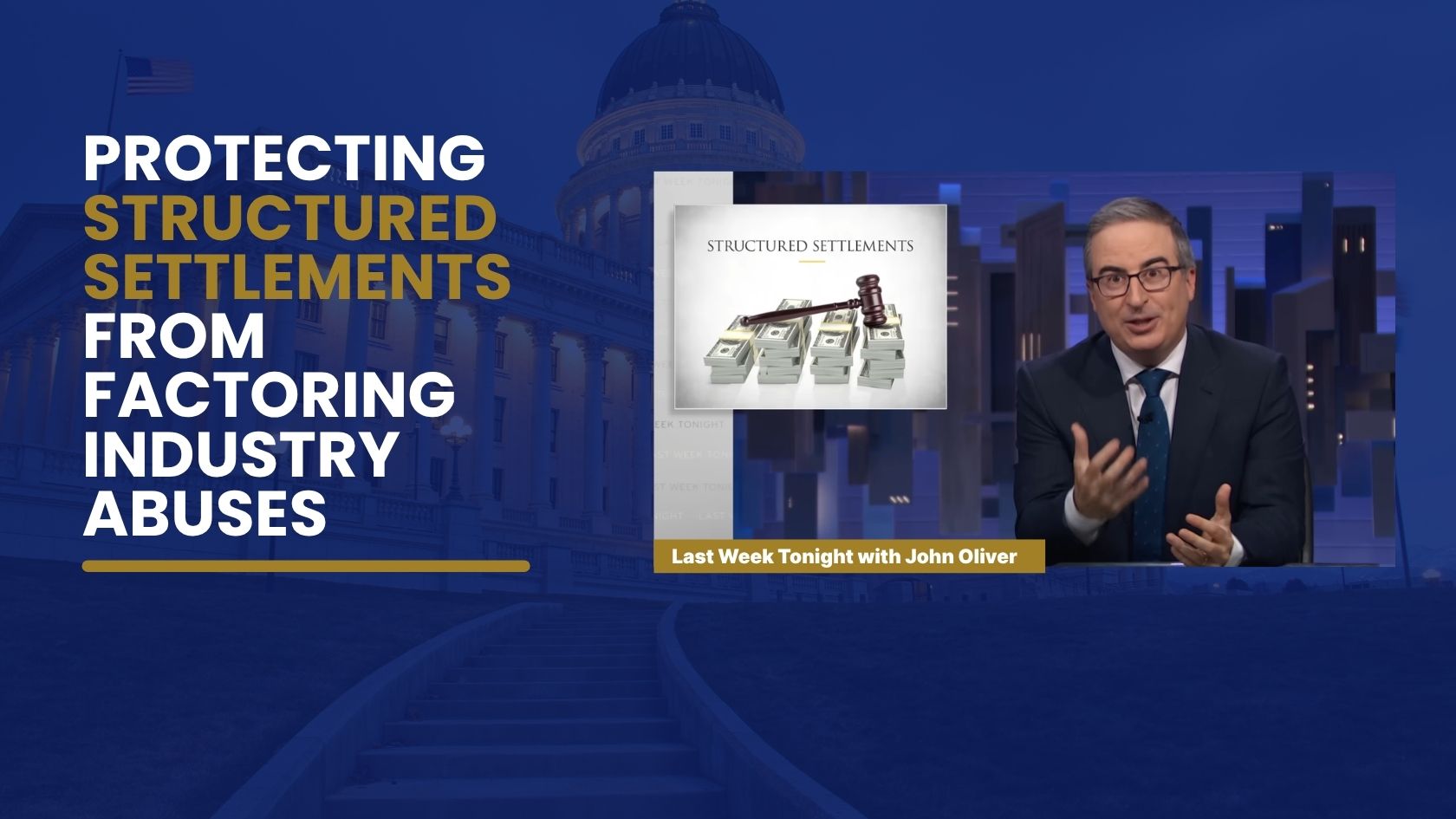
When Last Week Tonight with John Oliver dedicated a full segment to structured settlements and the factoring industry, it marked a significant moment: a consumer protection issue that NSSTA and allied advocates have documented, litigated, and formally petitioned federal and state legislators and regulators about for years had reached a national prime-time audience.
The segment did not emerge from nowhere. It drew on a documented record of predatory practices that stretches back decades and includes investigative journalism, formal regulatory filings, court decisions, and firsthand accounts from injury victims across the country.
The Investigative Foundation
The 2022 investigative series published by The Sun News of Myrtle Beach, South Carolina, is among the most detailed recent accounts of how the factoring industry operates and whom it targets. Investigative Projects Reporter David Weissman and his editors documented how factoring companies pursue South Carolina injury victims through aggressive solicitation, file cases in jurisdictions far from where sellers live, and pursue payees after initial transactions in a sustained effort to generate repeat business.
That reporting did not remain local. Published through the McClatchy network, it reached readers across the country and helped inform what became a broader national conversation about the factoring industry and its impact on injured people and their families.
What NSSTA Heard Directly from the Reporter
NSSTA Executive Director Eric Vaughn interviewed Weissman on the Settle Smart podcast to discuss the findings in depth. That conversation surfaced several details that help explain both the scope of the problem in South Carolina and why it became a focal point for national attention.
South Carolina passed one of the earliest Structured Settlement Protection Acts in the country, in 2002. Despite that early action, the state became a destination for factoring activity after neighboring states tightened their own laws. North Carolina enacted an interest rate cap that reduced factoring volume there. Florida regulators moved against some of the industry's worst actors. As those pressures increased, the activity shifted northward into South Carolina.
Weissman's data showed that South Carolina payees were receiving an average of 25 cents on the dollar in factoring transactions. One case he led his series with involved a young woman with a traumatic brain injury who completed 17 separate transactions, progressively selling off a lifetime settlement stream that had been designed to support her long-term care.
The reporting also revealed a feature of South Carolina's court system that compounded the problem: cases were being routed to Masters in Equity and special referees, attorneys assigned judicial powers rather than elected or appointed judges. That structure created additional inconsistency in oversight and scrutiny.
South Carolina Supreme Court Chief Justice Donald Beatty issued an order addressing that system. That order arrived one day before the first Sun News story published, reflecting action taken after legislators brought Weissman's pre-publication findings to the Chief Justice's attention.
During the podcast conversation, Vaughn outlined NSSTA's judicial education program, which had already been developed and delivered in Minnesota for CLE credit. He noted that he was sending a letter to Chief Justice Beatty offering a similar program for South Carolina judges, providing guidance on the questions judges should ask, the information they should request from payees directly, and how to apply a meaningful best-interest standard.
What Structured Settlements Are
A structured settlement provides tax-free, periodic payments to individuals who have been injured or suffered a wrongful-death loss. The Periodic Payment Settlement Act of 1982 established the legal framework, and federal tax law exempts those payments from income, interest, dividend, and capital gains taxes. They are designed to provide long-term financial security, not a single lump sum subject to depletion.
The factoring industry exists because once a structured settlement is established, recipients generally cannot unilaterally accelerate their payments. Factoring companies offer to purchase future payment streams in exchange for an immediate lump sum, typically at a substantial discount.
What NSSTA Has Formally Documented
NSSTA submitted a formal comment to the Consumer Financial Protection Bureau calling for an end to abusive, deceptive, and unfair practices in the factoring industry. That comment drew on an extensive record, including investigative reporting from multiple national outlets and court decisions documenting specific harms caused to injury victims.
Among the documented patterns NSSTA identified: discount rates ranging from 16% to as high as 28%, in some cases exceeding what usury laws permit; complex and lengthy agreements that recipients frequently cannot fully understand; aggressive marketing directed at cognitively impaired individuals whose disabilities stem from the same injuries that produced their settlements; targeted solicitation of recipients as young as 18; and a pattern of repeat transactions that progressively depletes a recipient's payment stream.
The scale of the industry is significant. According to reporting cited in NSSTA's CFPB comment, one industry participant had by 2014 assembled a database of 122,000 current and prospective customers representing $32 billion in structured settlement payments to be acquired.
U.S. Senator Tina Smith, in an October 2021 letter to the CFPB, stated directly that existing state and federal protections intended to guard against abusive purchases of structured settlements are "generally inadequate."
Why Court Approval Has Not Been Sufficient
Every state and the District of Columbia has a Structured Settlement Protection Act requiring judicial approval of factoring transactions and a finding that the transaction is in the payee's best interest. The problem is structural: these proceedings are non-adversarial. Typically, only the factoring company's attorney and the seller are present, with no independent advocate for the payee. Hearings have been documented taking as few as two to three minutes.
The results of appointing an independent guardian ad litem are instructive. Where courts have done so, approval rates have dropped significantly, and in many cases, payees withdrew their requests after meeting with an advisor before the court even ruled. As NSSTA's CFPB comment noted, only five states specifically authorize courts to appoint a guardian ad litem in connection with transfer petitions.
The Maryland experience provides a concrete benchmark. After regulatory action in that state, the number of active factoring companies operating there declined from approximately 1,800 to just six. That outcome reflects what focused regulatory attention can accomplish.
What NSSTA Has Called For
In its formal filing with the CFPB, NSSTA called for several specific reforms: mandatory appointment of a guardian ad litem for cognitively impaired payees and for payees between the ages of 18 and 25; requirements for independent physician competency statements where a payee's mental capacity is at issue; limitations on repeat factoring transactions within a defined period; and sealing of minor settlement records to prevent third parties from searching court dockets to identify payees before they reach the age of majority.
NSSTA has also developed and delivered a judicial education program, already implemented in Minnesota for CLE credit, providing judges with the tools to scrutinize factoring transactions effectively and apply a genuine best-interest standard. Extending that program to additional states remains an active priority.
What the Oliver Segment Added
Last Week Tonight brought this documented record to a broad national audience. It introduced millions of viewers to the mechanics of factoring, the inadequacies of the current judicial oversight process, and the human cost of predatory transactions. The cases it featured are consistent with what investigative reporters and consumer advocates have documented for years.
The segment also offered practical guidance that aligns with NSSTA's long-standing positions: explore hardship provisions with your settlement administrator before considering any factoring transaction; obtain written disclosure of all terms before signing, including the total value of remaining payments, the present value of that total, the lump sum offered, and all applicable fees and discount rates; and understand your right to cancel within the state-defined window.
The Path Forward
Structured settlements exist because Congress determined that injured people deserve long-term financial protection. NSSTA will continue to advocate for federal and state reforms that protect settlement recipients from predatory practices and ensure that the protections structured settlements were designed to provide remain intact.
For anyone with questions about their structured settlement, NSSTA's public resources page is the right place to start. Visit nssta.com/structured-settlements/public-resources for information about structured settlements, consumer protections, and how to protect your financial future.
Frequently Asked Questions
What is structured settlement factoring?
Structured settlement factoring is the process by which a third-party company purchases the rights to future structured settlement payments from the original recipient in exchange for an immediate lump sum. The recipient permanently gives up the right to those future payments, and the purchasing company collects them instead. The lump sum offered is typically a fraction of the total value of the payments being sold.
How much do factoring companies take from a structured settlement?
An analysis of seven states cited in the Last Week Tonight segment found that factoring companies retain an average of 60% of the total value of the payment streams they purchase. NSSTA's formal CFPB comment documented discount rates ranging from 16% to as high as 28% in some transactions, in some cases exceeding what usury laws permit. Investigative reporting in South Carolina found payees receiving an average of 25 cents on the dollar.
Are structured settlement payments tax-free?
Yes. Under federal law, structured settlement payments are exempt from federal and state income taxes, as well as interest, dividend, and capital gains taxes. This tax-free status is one of the primary financial advantages of a structured settlement and is established under Section 104(a) of the Internal Revenue Code. That tax benefit does not transfer when payments are sold to a factoring company.
What is a Structured Settlement Protection Act?
A Structured Settlement Protection Act (SSPA) is a state law that regulates the sale of structured settlement payment rights to factoring companies. Every state and the District of Columbia has enacted an SSPA. These laws generally require a court to approve any factoring transaction and to find that the transaction is in the best interest of the payee. However, consumer advocates and NSSTA have documented significant limitations in how these proceedings are conducted and overseen.
What is a guardian ad litem in a structured settlement factoring case?
A guardian ad litem (GAL) is an independent advisor appointed by a court to assess whether a proposed factoring transaction is in the payee's best interest and to provide the court with information the factoring company's attorney would not otherwise present. Only five states currently authorize courts to appoint a GAL in structured settlement transfer cases. Where GALs have been used, court approval rates for factoring transactions have dropped significantly, and many sellers withdraw their requests after consulting with one.
What did John Oliver say about structured settlements?
In a segment on Last Week Tonight, John Oliver examined how the factoring industry purchases structured settlement payment rights, often at severe discounts, from injured people who may not fully understand the terms. The segment reported that factoring companies retain an average of 60% of the value of payment streams they purchase and that the industry acquires an estimated $1 billion in payment rights annually. Oliver highlighted the non-adversarial nature of court approval hearings and cases involving cognitively impaired recipients who were targeted by factoring companies.
What should I know before selling my structured settlement payments?
Before considering a factoring transaction, contact the insurance company that administers your settlement to ask whether a hardship provision is available. That option may provide access to funds at more favorable terms. If you proceed, you have the right to receive a written disclosure of the total value of your remaining payments, the present value of that total, the lump sum being offered, and all fees and discount rates. Nearly all states provide a cancellation window after signing; confirm that right in writing before executing any agreement.
What has NSSTA done to protect structured settlement recipients from predatory factoring?
NSSTA has submitted a formal comment to the Consumer Financial Protection Bureau calling for an end to abusive, deceptive, and unfair practices in the factoring industry and advocating for specific regulatory reforms. NSSTA has developed a judicial education program, delivered in multiple states for CLE credit, that provides judges with tools to scrutinize factoring transactions and apply a genuine best-interest standard. NSSTA also engages directly with investigative journalists, legislators, and consumer advocates to build the public and policy record needed to drive meaningful reform.
Related Resources
Regulation is Required to Combat Factoring — NSSTA's formal comment to the Consumer Financial Protection Bureau
Settle Smart Podcast: David Weissman, The Sun News — NSSTA Executive Director Eric Vaughn interviews the investigative reporter behind the Sun News series
Doing Structured Settlements the Right Way with Sally Greenberg — Settle Smart Podcast, National Consumers League