


The short answer
The structured settlement industry entered 2026 stronger, larger, and more complex than at any point in its history. Record production, increased competition, new capital, and heightened regulatory pressure are reshaping how settlements are designed while reinforcing the case for structured settlements as essential to long-term financial security.
Why structured settlement production reached record levels
One of the clearest takeaways from this conversation is that record production did not happen by accident. According to Buster Joyner, several forces converged at the same time:
- Larger settlements driven by social inflation
- Higher interest rates improve internal rates of return
- Greater awareness of structured settlements as a planning tool
- Increased focus on long-term financial security for injured people and their families
As settlements grow in size, there is more room, and greater necessity, to structure portions of the recovery. Past medical expenses, ongoing care, and long-term income needs cannot be addressed by a single cash payment.
How social inflation is changing settlement design
Social inflation continues to push settlement values higher, particularly in serious injury and catastrophic cases. As Joyner explains, larger settlements introduce more complexity at the negotiation table.
Structured settlements help bring clarity to that complexity by translating large numbers into real, predictable payment streams. When future medical costs, monthly care expenses, or lifetime income needs are clearly defined, compromise becomes possible.
This is where structured settlements continue to prove their value — not as a sales product, but as a practical tool for resolution.
Why new life insurance companies are entering the market
Another notable shift is the entrance of new life insurance companies into the structured settlement space. This increased participation signals confidence in the industry and introduces a more competitive marketplace.
With competition comes:
- Greater pricing pressure
- Improved rate offerings
- Expanded capacity for settlement funding
At the same time, Joyner notes that structured settlements are not a market that companies can simply enter overnight. The regulatory, administrative, and cultural learning curve remains steep — and that serves as a stabilizing force for the industry.
Structured settlements as a product of compromise
A central theme of the conversation is the idea that structured settlements are, and always have been, a product of compromise.
Settlement negotiations require alignment between plaintiffs, defendants, insurers, and counsel. Structured settlements help bridge gaps by addressing real-world needs rather than abstract dollar figures.
Whether the issue is replacing lost income, covering long-term care, or ensuring family stability, structured settlements give all parties a framework for reaching an agreement.
Approved lists, QSFs, and emerging pressures
Joyner also addresses growing tension around approved lists, Qualified Settlement Funds (QSFs), and the introduction of market-based products.
As new capital and private equity enter the space, pressure increases to remove barriers and accelerate production. At the same time, insurers and regulators remain focused on risk, contingent liability, and long-term obligations.
This tension is not easily resolved, and there is no single solution. What is clear is that these issues cannot be addressed in isolation or through fragmented industry voices.
Why unity matters more than ever
One of the strongest messages from this discussion is the importance of unity across the structured settlement industry.
Joyner emphasizes that a divided industry weakens its ability to protect the tax treatment, regulatory framework, and long-standing consumer protections that structured settlements rely on.
A single, informed voice in Washington remains essential, not just for advocacy, but for preserving the integrity of the system that supports injured people and their families.
Leadership, education, and the next generation
After four decades in the industry, Joyner’s decision to pursue the CSSC designation underscores a broader point: education and professionalism remain critical.
Structured settlements continue to evolve, and the next generation of professionals will inherit a more complex environment than ever before. Strong education programs, shared standards, and institutional knowledge will shape the industry’s future.
What this means going forward
The structured settlement industry enters 2026 with momentum, but also responsibility. Growth brings scrutiny. Innovation brings risk. And complexity demands collaboration.
What has not changed is the core purpose of structured settlements: providing long-term financial security for people navigating life-altering events.
That foundation remains strong, and it will continue to guide the industry forward.
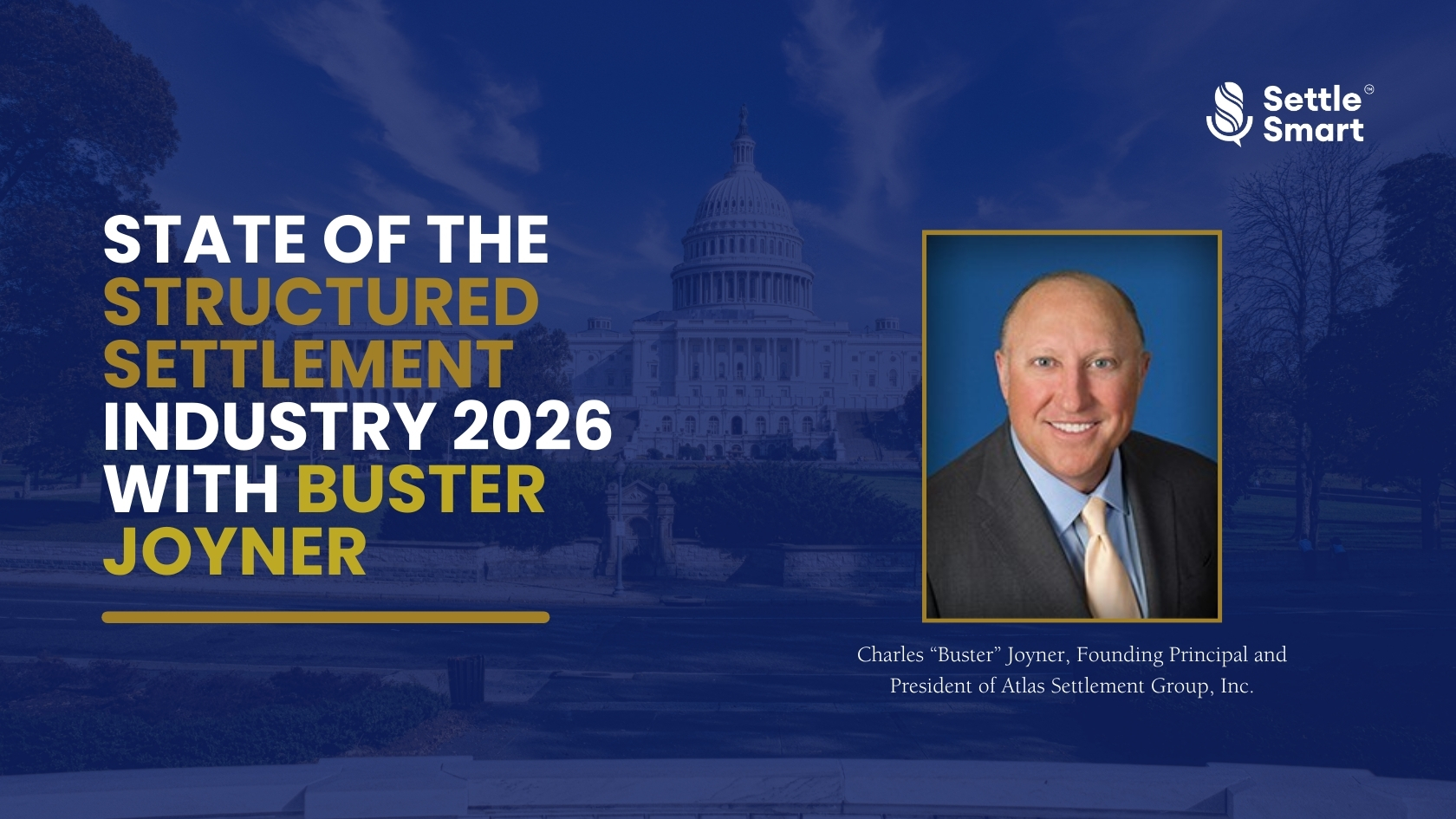
This article is based on a conversation from the Settle Smart Podcast featuring Buster Joyner, President of Atlas Settlements and 2026 President of the NSSTA Board of Directors.